Brakes & Suspension
On-site inspection and repair for brake noise, poor pedal feel, vibration, steering concerns, uneven tyre wear and suspension faults across Mount Barker, Nairne and the Adelaide Hills.
Brake faults are confirmed at the component
These customer-supplied workshop photos show a rear drum brake inspection and rear axle/hub access during brake-related repair work.
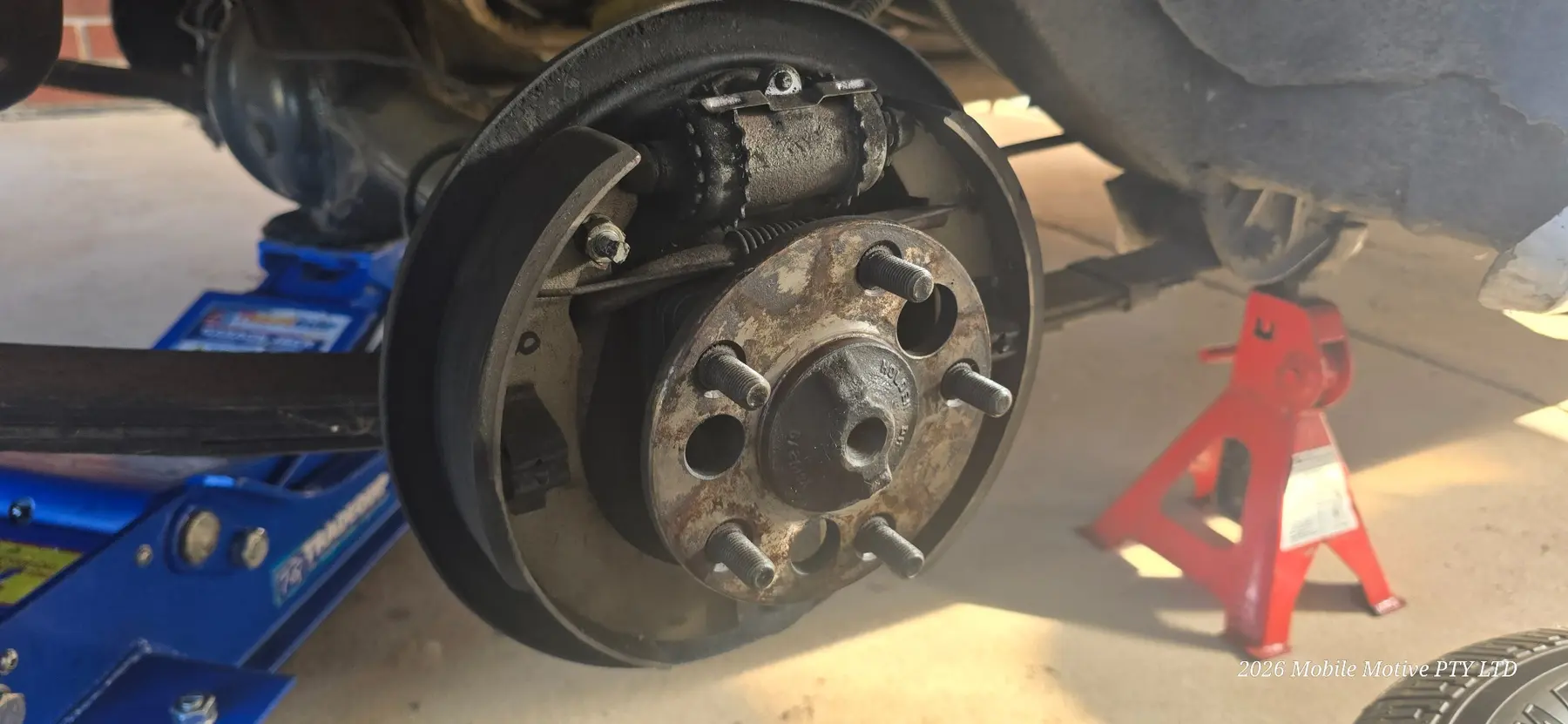
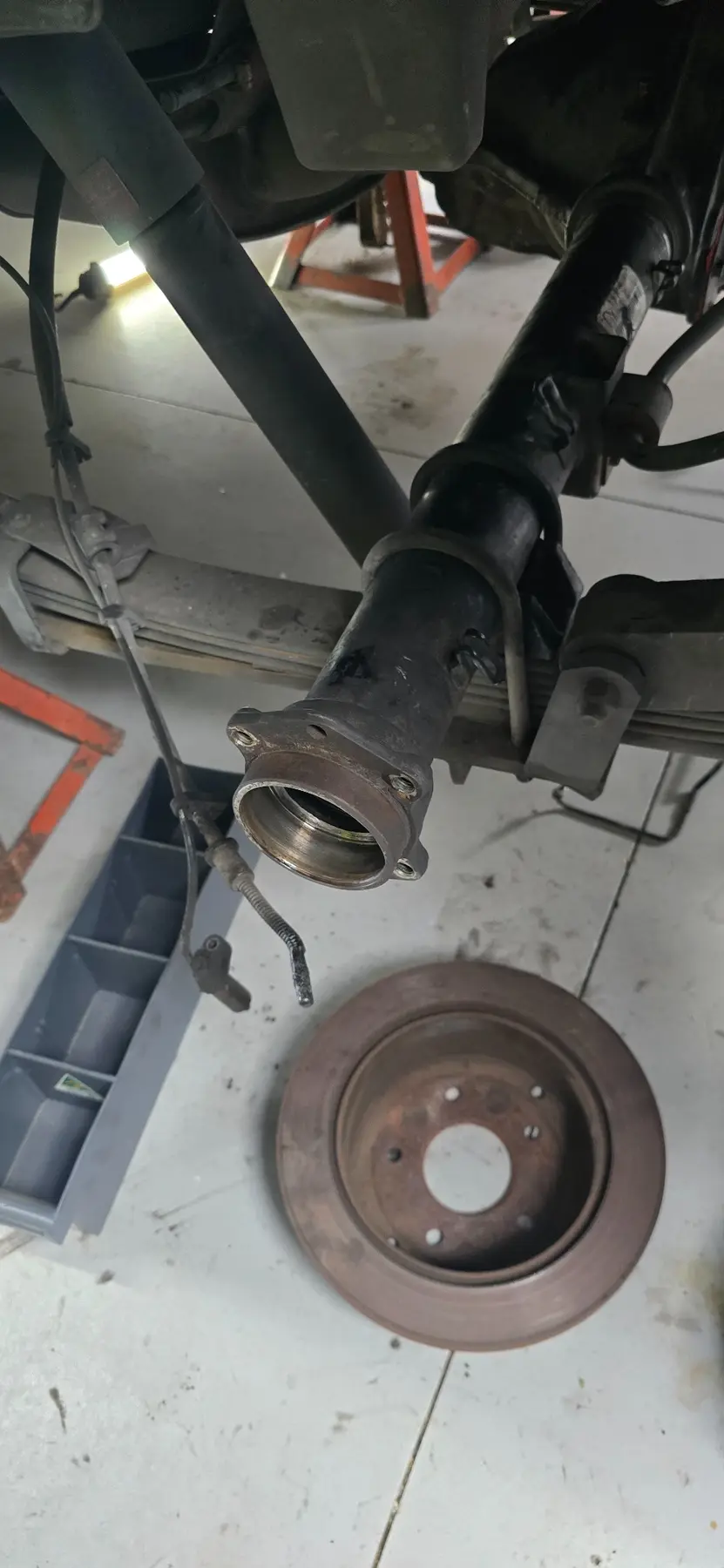
When to arrange a brake inspection
Book an inspection if you notice grinding or persistent squealing, a soft or sinking pedal, pulling under braking, steering-wheel shake, pedal pulsation, a brake or ABS warning light, fluid loss or a clear increase in stopping distance. If the pedal is very low, braking is severely reduced, fluid is leaking or the vehicle feels unsafe, stop driving and arrange recovery or professional advice.
A brake noise does not automatically mean “pads only”. Pads or shoes, rotors or drums, calipers or wheel cylinders, hardware, hoses, wheel bearings, contamination and installation issues can create similar symptoms. The fault needs to be identified before parts are authorised.
What Mobile Motive checks
- Brake pad or shoe condition and wear pattern
- Rotor or drum surface condition and measurements against vehicle-specific limits
- Calipers, slides, wheel cylinders, hoses, hard lines and visible hydraulic leaks
- Springs, adjusters, backing plates and parking-brake operation where fitted
- Brake-fluid level and condition, using the manufacturer-specified fluid type
- Hub and bearing condition where it affects the brake assembly
- ABS or stability-control fault codes when warning lights or symptoms require scan testing
- Pedal feel, leak checks and a controlled road test when the vehicle is safe and legal to drive
There is no single pad, shoe, rotor or drum limit that applies to every vehicle. Measurements and replacement decisions are made using the specification for the exact model and fitted component.
Inspection, approval, repair and verification
1. Confirm
The complaint is checked and accessible brake, steering and suspension components are inspected and measured.
2. Explain
Findings, parts options and the quoted repair are explained before additional work proceeds.
3. Repair
Approved parts are fitted using the relevant service information, correct fluid and vehicle-specific tightening specifications.
4. Verify
Pedal operation, leaks, warning lights and wheel security are rechecked, followed by a controlled road test when appropriate.
Noise and tyre wear can have more than one cause
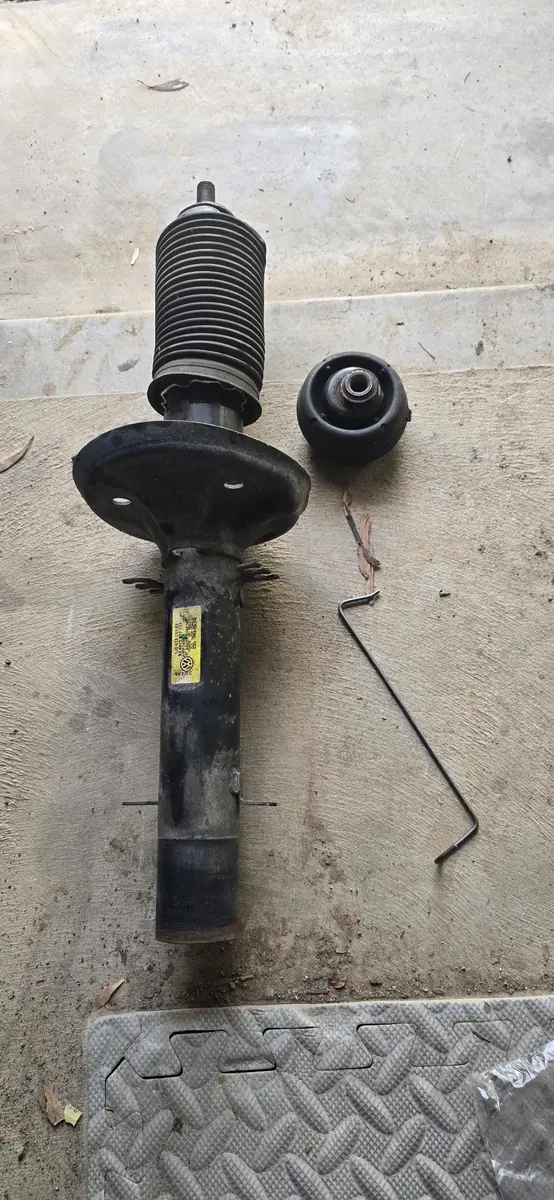
Clunks, wandering, poor ride control, steering looseness or uneven tyre wear can involve bushes, ball joints, tie-rod ends, struts, shock absorbers, springs, mounts, wheel bearings or tyres. Mobile Motive checks the symptom and the related components before recommending a repair.
A wheel alignment may be required after some steering or suspension repairs. Alignment is not presented as a cure for loose or damaged parts; those faults need to be repaired first.
Where mobile work is suitable
Many brake and suspension inspections, pad and rotor replacements and selected component repairs can be completed on-site. The vehicle must be on a firm, level surface with safe working clearance. A jack is used for lifting—not as the sole means of support. Jobs needing specialist machining, alignment equipment, a workshop press or conditions that cannot be made safe will be referred or rescheduled appropriately.
Brake and suspension FAQs
Can you replace brake pads at my home or workplace?
Often, yes. The location needs a firm, level surface and enough safe working room. The brake system is inspected first so pads are not fitted over an unresolved rotor, caliper, hydraulic or bearing fault.
Do rotors need replacing with every pad change?
Not automatically. Rotor thickness, surface condition, runout symptoms and the applicable service limit determine whether they can remain in service, be machined where appropriate, or require replacement.
Can you diagnose an ABS warning light?
Yes. Scan results are combined with circuit, sensor and mechanical checks as needed. A stored code identifies the system reporting a fault; it does not by itself prove which part should be replaced.
Is a mobile inspection a roadworthy certificate?
No. Mobile Motive can inspect and repair safety-related faults, but a general service or brake inspection is not represented as a statutory roadworthy certificate or guarantee that every component is fault-free.
Need your brakes or suspension checked?
Send the registration or VIN, suburb and exact symptom so Mobile Motive can prepare the right inspection path.