Brake Fluid Flush Adelaide Hills
Brake fluid absorbs moisture over time and must remain compatible with the vehicle hydraulic system. Mobile Motive checks the system condition and uses the manufacturer-specified fluid before bleeding each circuit correctly.
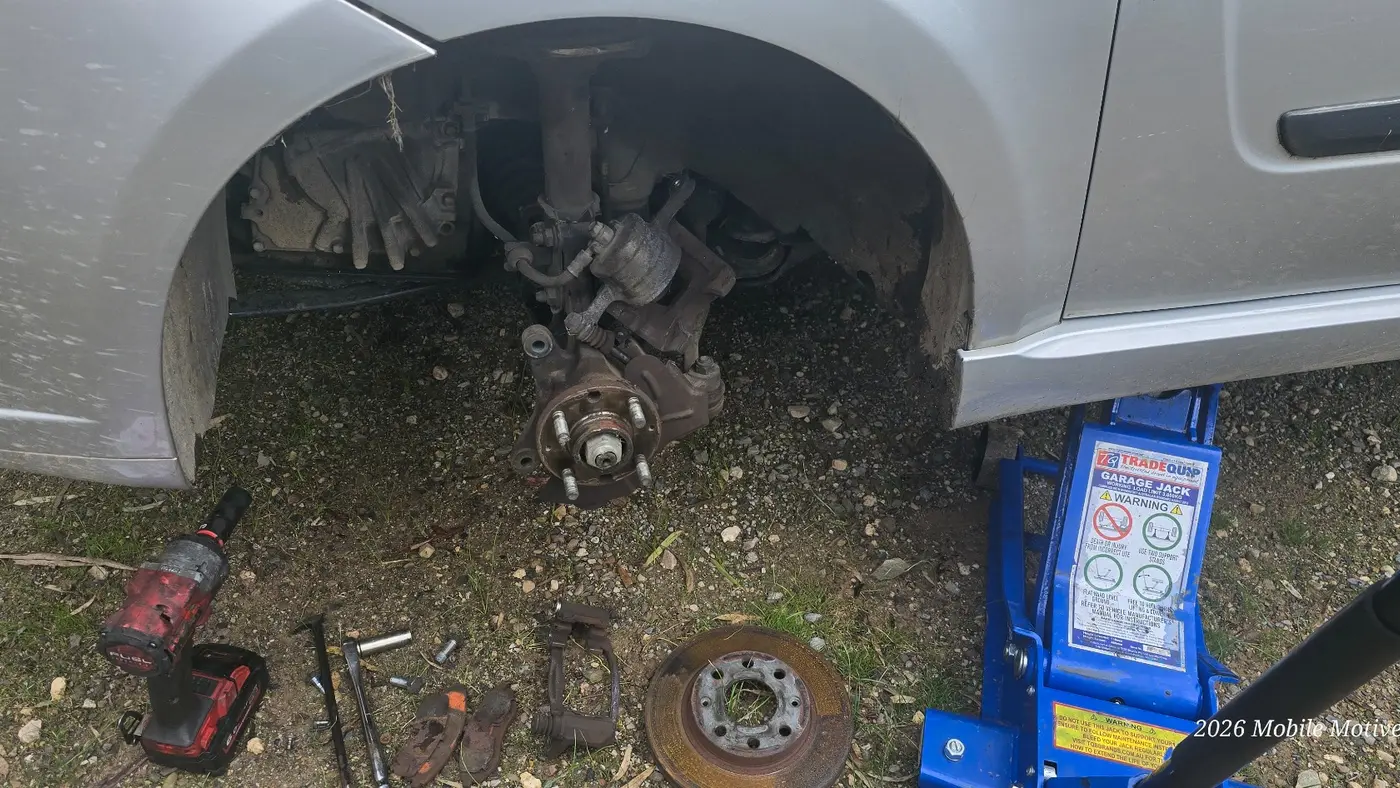
When to arrange an inspection
- Brake fluid replacement is due by time or service schedule
- Fluid is dark, contaminated or has tested outside an acceptable condition
- Hydraulic components have been replaced or the system opened
- A soft pedal requires diagnosis for air, leaks or component faults
- Incorrect or unknown fluid has been added
If the vehicle will not start safely, has smoke or overheating wiring, has severely reduced braking, or is leaking brake fluid, stop using it and arrange professional advice or recovery.
What Mobile Motive checks
- Confirm the specified DOT fluid and service information for the exact vehicle
- Inspect reservoir condition, fluid level and visible contamination
- Check master cylinder, calipers, wheel cylinders, hoses and lines for leaks
- Assess pedal feel before disturbing the hydraulic system
- Bleed in the required sequence and monitor the fluid level throughout
- Use scan-tool ABS bleed functions only where the vehicle procedure requires them
- Recheck pedal feel and visible leaks after the service
Brake fluid flush FAQs
Does a brake fluid flush fix a soft pedal?
Not always. A soft or sinking pedal can be caused by air, an external leak, hose expansion, caliper movement, rear-brake adjustment, a master-cylinder fault or an ABS hydraulic problem. Diagnosis comes first.
Can different brake fluids be mixed?
Only fluids explicitly compatible with the vehicle specification should be used. DOT 5 silicone fluid is not interchangeable with conventional glycol-based DOT 3, DOT 4 or DOT 5.1 systems.
Does the ABS unit always need scan-tool bleeding?
No. A scan-tool procedure is used when required by the manufacturer, particularly if air may have entered the hydraulic control unit or a component has been replaced.
How often should brake fluid be replaced?
Use the interval and fluid specification for the exact vehicle. Time, moisture exposure, repairs and tested condition can all influence the recommendation.
More mobile repair services
Need brake fluid flush?
Send the registration, suburb and exact symptoms so the correct test plan and parts can be prepared.